
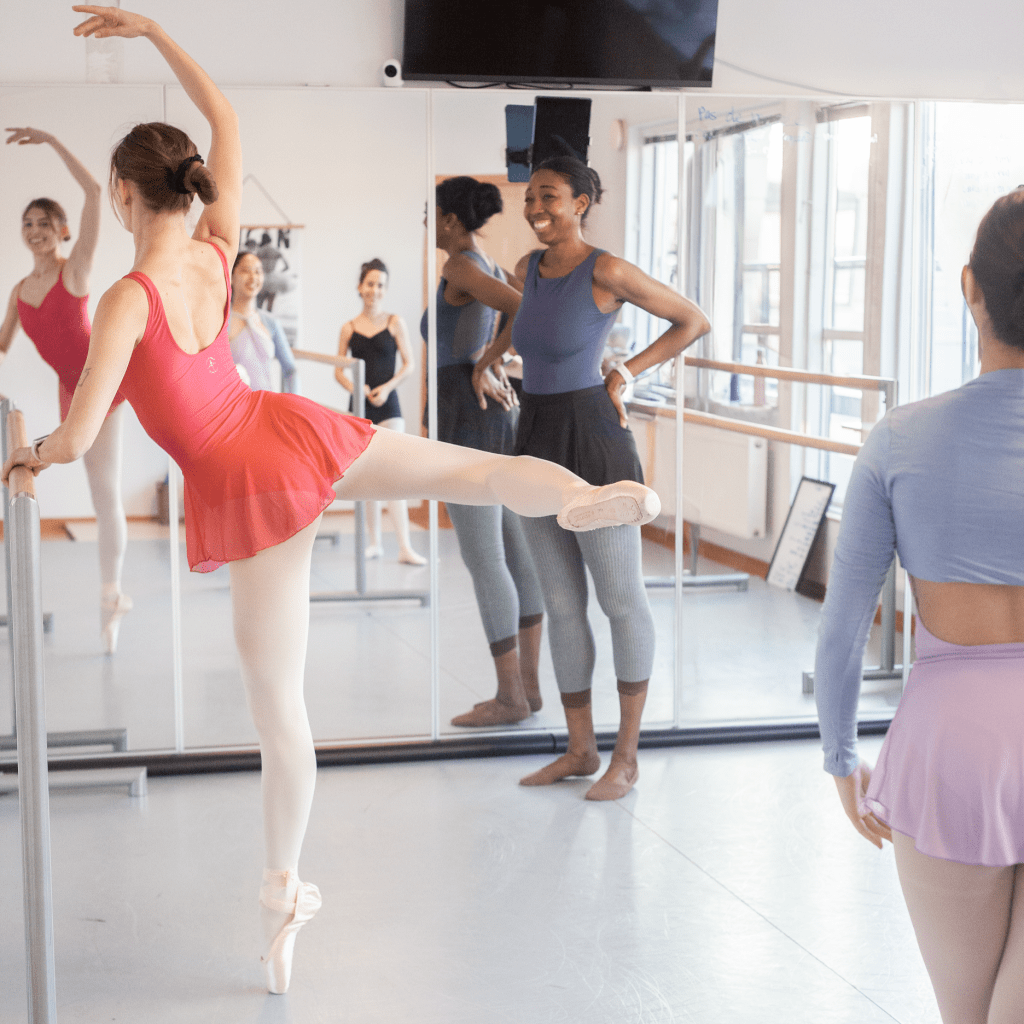
According to the Cambridge Dictionary, etiquette is defined as “the set of rules or customs that control accepted behavior in particular social groups or social situations.” In the world of ballet, etiquette is an integral part of the art — passed down through generations and traditionally taught from a young age. Just as mastering a well-aligned plié is fundamental, so is understanding and practicing proper class etiquette.
While adult ballet classes tend to be more relaxed than professional schools or children’s class, certain customs still hold value and contribute to a positive learning environment. We explored this topic through teacher and student feedback, as well as time-honored traditions that have shaped the ballet world.
So why is etiquette so important? It helps classes run smoothly, fosters respect — for the teacher, for fellow dancers, and for the art itself — and creates a welcoming space for all.
Arriving On Time & Leaving Early
Whenever possible, aim to arrive on time. If you’re running late, kindly let your teacher know in advance. When you do arrive, join the class quietly and wait for an appropriate moment to enter — typically at the end of an exercise. If you need to leave early, notify your teacher beforehand and exit respectfully when there’s a natural break. While occasional lateness is understandable, try to avoid making it a habit.
Taking Class with a New Teacher
Approaching a new teacher with an open mind can be a wonderful opportunity to expand your understanding of ballet. Every instructor brings their own style, experience, and vocabulary — embrace the differences rather than comparing them. There’s always something valuable to be learned from each teacher’s unique perspective.
Barre Etiquette
If the studio is busy, try to find a spot that allows everyone adequate space. When sharing both sides of the barre, it’s best to stagger — stand in the “window” between the dancers opposite you. If you’re unsure where to go, don’t hesitate to ask the teacher for guidance. If you arrive late and the barre is full, wait quietly for further instruction.
Center Work
During center, groups are often assigned for combinations. Listen carefully, know which group you’re in, and be ready when it’s your turn. A helpful rule of thumb: more experienced dancers stand toward the front, while those newer to ballet stand further back, allowing everyone a clear view. Dancers often rotate lines so everyone gets a chance to use the mirror — be mindful and take turns.
Spatial Awareness
Being aware of those around you is essential to a safe and enjoyable class. Try to stay within your designated space, especially during traveling steps, turns, and jumps. When moving across the floor, follow the established path, exiting forward (downstage) and off to the closest side. Try to avoid stepping backward if you stop — step forward and clear the space.
Talking in Class
Socializing is a lovely part of adult ballet classes, but timing is key. Please give your full attention during demonstrations and when classmates are performing. Use this time to mark the combination or observe. Before or after class is the best time to chat and catch up.
Eating & Drinking
Water is welcome and breaks will be provided throughout class. Please avoid eating snacks or chewing gum during class time — those can wait until after.
Personal Hygiene
As we dance in close proximity, good hygiene is appreciated. Please arrive clean and wear deodorant. Wash ballet slippers if they develop a strong odor, and avoid wearing strong scents, as others may be sensitive to fragrances.
Phone Use During Class
We ask that phones be silenced and put away during class. If you are expecting an urgent call, please inform your teacher ahead of time.
Clapping at the End of Class
We end class with applause as a sign of respect and gratitude — for the teacher, the pianist (if present), or one another. It’s a beautiful tradition that honors our shared journey in the studio.
Questions are always welcome — we pride ourselves on maintaining a friendly, open, and respectful environment. While we keep our classes relaxed and inclusive, observing these simple etiquette guidelines helps everything run smoothly, encourages mutual respect, and makes space for everyone to feel seen and valued.
Happy dancing, and until our next plié!
